
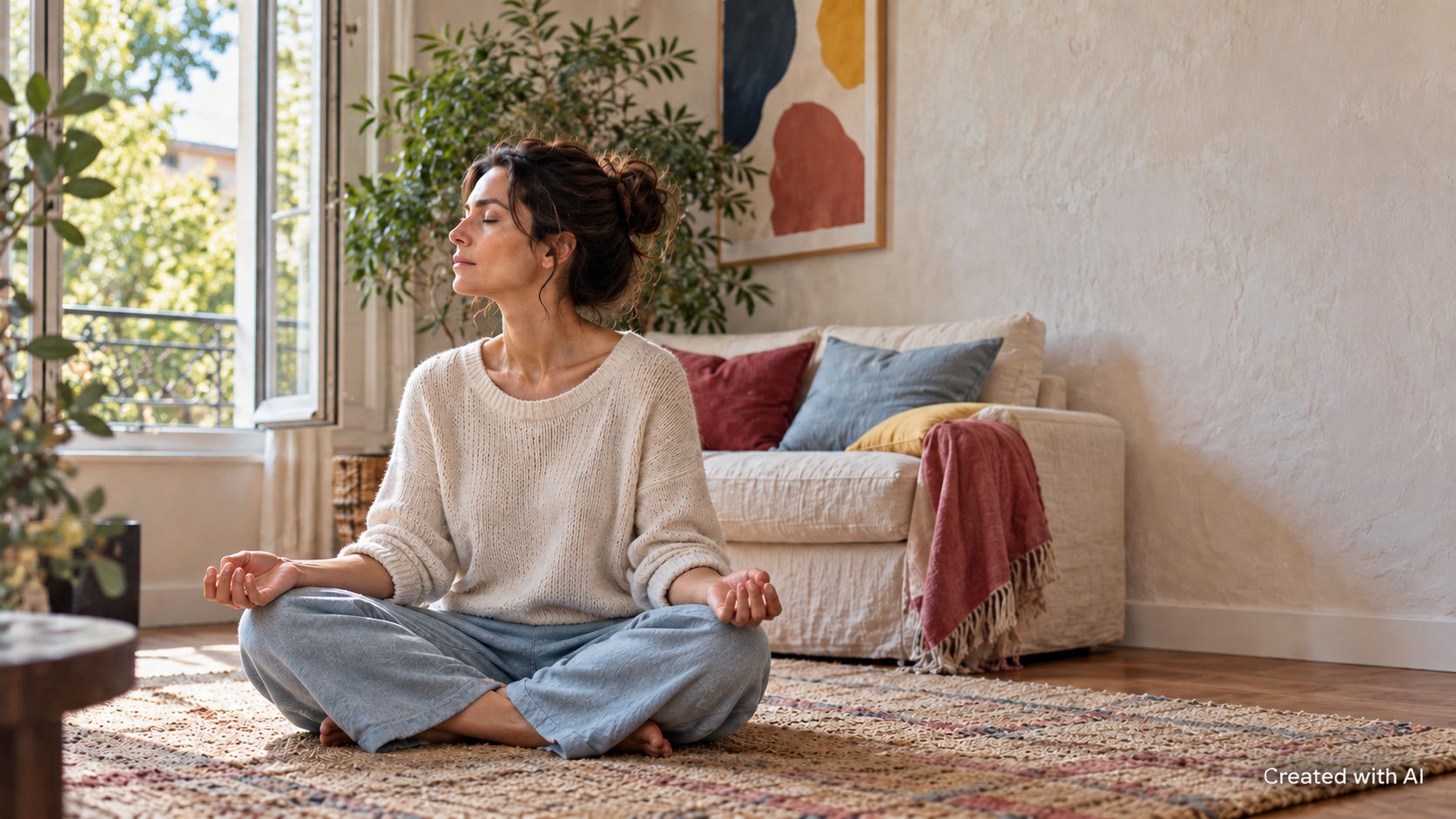
Meditation and manifestation can belong in the same personal practice, but they begin in different places. Meditation brings attention to the present. Manifestation brings attention to a future you want to experience more fully. One can create space – the other can give that space a direction.
Meditation is a practice of noticing what is here. Depending on the approach, that may mean following the breath, observing thoughts, scanning the body, repeating a phrase, or resting attention on a sound.
The goal is not always to feel calm. A meditation can make you more aware of a busy mind, a difficult feeling, or a physical sensation. The practice is to notice without immediately having to solve, judge, or act on it.
People often use meditation to create a pause in a full day. That pause can make it easier to return to a conversation, decision, or task with more attention.
Manifestation is a practice of connecting with a desired future. It may include visualization, affirmations, scripting, personal audio, reflection, or small actions that fit the life you are calling in.
The focus is not simply on a goal as an item on a list. It is on making a future feel personal and concrete: the kind of work you do, how your home feels, how you relate to others, what you make room for, and how you want to meet your own life.
For some people, manifestation is spiritual. For others, it is a way to stay connected to a vision that can otherwise disappear beneath routines and demands. Both approaches can include imagination, meaning, and a repeated return to what matters.
Meditation is not a requirement for manifestation. You do not need a perfectly quiet mind in order to imagine a different life.
But a brief settling practice can be useful when you feel rushed, depleted, or caught in the same thoughts. A few slower breaths, or a short meditation can give you enough room to consider something beyond the next urgent demand.
From there, manifestation can become more specific. Instead of asking yourself to feel positive, you can ask: What would make my ordinary life feel more like my own? What do I want more of? What is one small way I could honor that today?
Meditation is a good fit when you want to pause, settle your attention, or sit with an experience without turning it immediately into a plan. It can be especially helpful when the question is not “What should I want?” but “What is happening for me right now?”
You may prefer meditation when you want a practice without a future-oriented prompt. A simple body scan, breath practice, or open-awareness meditation can be enough.
Manifestation is a good fit when you feel disconnected from what you want or when a meaningful desire has become vague. It gives you a place to name that desire, imagine it in the texture of real life, and return to it repeatedly.
You may prefer manifestation when you want more than a moment of calm. The practice can hold a vision and help you notice choices that feel aligned with it.
A simple combined practice can begin with a short period of quiet and end with a future-focused prompt. For example:
The sequence is flexible. On some days, meditation may be all you need. On others, a future-day visualization may be the part that helps you remember what you are working toward.
Meditation apps commonly offer breathing exercises, sleep audio, timers, body scans, and present-moment guidance. Manifestation apps commonly offer visualization, affirmations, prompts, personal audio, and reflection around a desired future.
Some products combine elements of both. The useful question is not which label sounds better. It is whether the practice you open helps with the moment you are actually in.
Vavaruna brings meditation and manifestation into one practice. Each personalized audio manifestation opens with a short meditation, giving you space to settle before reconnecting with the vision you are building. Guided clarity and daily aligned actions help you carry that vision into everyday life.
Manifestation can include meditation-like elements, such as slowing down, focusing attention, or listening to guided audio. Its central purpose is different: it is oriented around a desired future rather than attention to the present alone.
Yes. A quiet, attentive state can be a useful beginning for visualization or reflection. You can also keep them separate if that feels more natural.
No. A visualization can be brief and imperfect. Meditation is one way to create a little space beforehand, not a condition you have to meet.
If you are looking for a meditation practice focused on the present moment, these apps are (among others) built specifically around guided meditation, mindfulness, sleep, or breathwork:
If you want a manifestation practice that includes a moment of meditation, Vavaruna brings both together. Each personalized audio manifestation begins with a short meditation intro, giving you space to settle before reconnecting with the life you want to build. Guided clarity and daily aligned actions then help you carry that vision into everyday life.